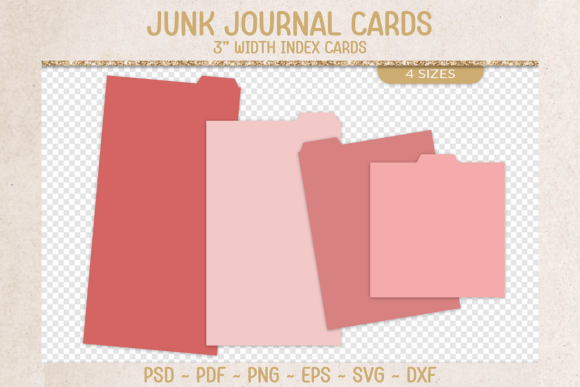
Unleash Your Creativity with Junk Journal Index Card Templates
There's a certain magic in the tangible, the slightly worn, and the personally curated. Junk journaling taps into that magic, offering a refuge from the perfectly polished digital world. But starting a journal from absolute scratch can be daunting. This is where thoughtfully designed Junk Journal Index Card Templates become an invaluable creative partner. They provide the foundational structure—the bones of your project—so you can focus on the joyful part: layering, collaging, and making something uniquely yours. Think of these templates not as a finished product, but as a versatile starting point for your own design narrative.
The Anatomy of a Perfect Creative Asset
What truly sets these Junk Journal Index Card Templates apart is their inherent flexibility and professional-grade construction. When you receive a package that includes PDF, PNG, SVG, DXF, EPS, and PSD files, you're not just getting static images. You're getting a toolkit designed for the modern creator. The fully editable PSD, EPS, and SVG files are the core of this offering. This means you can adjust colors, move elements, alter text, and completely deconstruct the design in Adobe Photoshop, Illustrator, or similar vector-based software. It’s like having a designer’s working files, putting you in complete control of the final aesthetic.
The visual personality of these templates often leans into a textured, handcrafted feel. You might find subtle paper grain effects, distressed edges, or vintage-inspired typography that immediately evokes a sense of history and authenticity. This style is incredibly appealing because it carries an emotional weight—it feels personal, nostalgic, and real. It’s a direct contrast to the sterile, corporate aesthetics we’re often bombarded with. For a small business owner creating brand materials, this style can communicate warmth, artisanal quality, and a human touch. For a hobbyist, it simply feels like coming home to a favorite pastime.
From Digital File to Tangible Masterpiece
The practical applications for these design assets extend far beyond a traditional journal. Their true power lies in their adaptability across different projects and mediums. Consider the entrepreneur designing product packaging. A single index card template element, when scaled and printed on kraft paper, becomes a charming hang tag for a handmade candle. A blogger can use the PNG stencils in any design app—like Canva or Procreate—to create cohesive social media graphics, ensuring their Instagram feed has a consistent, branded look. The cutting machine compatibility, via the SVG and DXF files, opens the door to physical crafting with precision. You can cut intricate frames, labels, and shapes from cardstock, vinyl, or even fabric for mixed-media projects.
This versatility directly influences brand perception and audience engagement. Using a consistent visual language built from these templates across your website, newsletter, and print materials creates a powerful sense of cohesion. It tells your audience that you value aesthetics and detail, which builds recognition and professionalism. For a publisher or content creator, incorporating these textured elements into editorial design—like chapter headers or pull quotes—can break up long blocks of text, improve visual hierarchy, and make the reading experience more engaging and memorable. It’s a subtle but effective way to elevate your content from merely informational to experientially rich.
Making These Templates Work for You
Choosing to use a template is the first step, but using it well requires a bit of strategy. Start by evaluating the project’s core need. Are you creating a logo design where a single, iconic element is key? Or are you developing a full brand identity system that requires numerous matching components? The Junk Journal Index Card Templates often provide a cohesive set of pieces, making them ideal for the latter. Look at the included styles—are there variations in texture, shape, or ornamentation that give you enough range?
Next, think about font pairing. The templates may come with suggested typefaces, but the real fun begins when you mix them. A distressed, handwritten font from the template might pair beautifully with a clean, modern sans-serif font for body text. This contrast creates visual interest and ensures readability. Always test your pairings at the size they’ll be used. What looks elegant on screen might become illegible when printed small. Readability is paramount; the goal is to capture attention with the style, but hold it with clarity.
Finally, consider the licensing for commercial use. Most premium font and template packages are clear about this, but it’s your responsibility to check. If you plan to use these elements in products you sell—like printed planners, digital kits, or merchandise—ensure the license permits it. This due diligence protects you and respects the original creator’s work. By viewing these Junk Journal Index Card Templates as a professional design resource, you empower yourself to produce work that is not only beautiful but also strategically sound and legally compliant. They are more than just pretty pictures; they are a launchpad for your most authentic and compelling creative projects.